
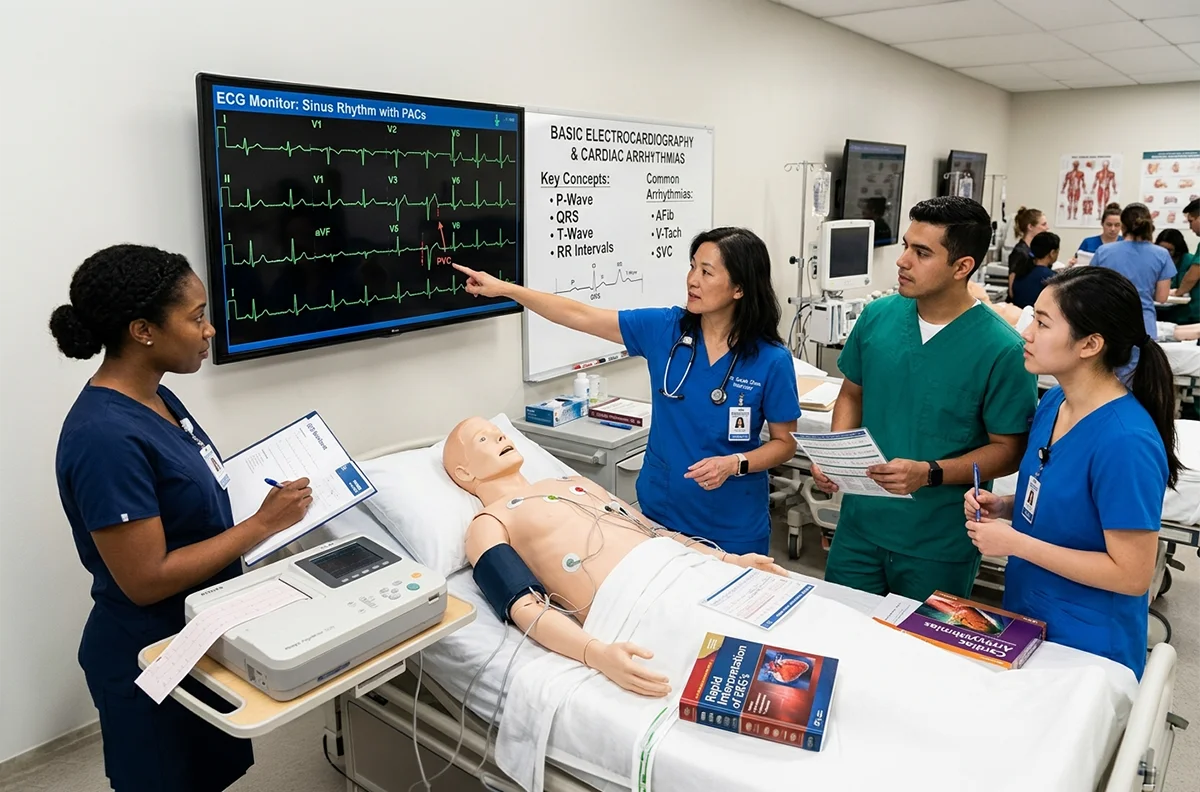
Basic Electrocardiography and Cardiac Arrhythmias
The Basic Electrocardiography and Cardiac Arrhythmias course is designed for professionals and students in the health area to acquire the essential knowledge and skills for the correct taking, interpretation and analysis of the electrocardiogram (ECG), as well as for the detection and timely management of cardiac arrhythmias and other cardiovascular emergencies that put the patient's life at risk.This program combines theory and practice in the interpretation of the electrocardiogram, the use of electrical therapies, and the application of resuscitation protocols in adults and pediatrics. Through an active and applied methodology, participants strengthen their capacity to respond to critical situations, contributing to safer, more efficient and quality care at the different levels of care.
General Objective
Strengthen the competencies of health professionals in the taking, analysis, and interpretation of the electrocardiogram, as well as in the application of updated protocols for the management of arrhythmias, guaranteeing timely, safe, and quality care.Specific Objectives
Recognize a normal electrocardiogram and establish the relationship between the different waves and intervals with the cardiac activation process. Define the concept of cardiac arrhythmia and understand the importance of QRS width as a differentiating element. Identify potentially serious arrhythmias, as well as the different types of bundle branch blocks and alterations related to ischaemic heart disease.Recognize the hypertrophies of the different heart chambers, as well as the main overactive and underactive cardiac arrhythmias.
Contenido del Programa
- Module 1 — Cardiac Anatomy and Electrophysiology: Anatomical bases of the heart, electrical conduction system, automatism, excitability and cellular conductance.
- Módulo 2 — El Electrocardiograma Normal: Génesis del ECG, ondas, segmentos e intervalos. Técnica de obtención y lectura sistemática del trazado.
- Module 3 — Pathological Electrocardiogram: Alterations of repolarization, growth of cavities and special patterns such as Brugada syndrome, long QT and Wolff-Parkinson-White syndrome.
- Module 4 — Introduction to Arrhythmias: Definition of Arrhythmia and Main Arrhythmogenic Mechanisms. Supraventricular and ventricular arrhythmias, and introduction to their treatment.
- Module 5 — Conduction Disorders: Bundle Branch Blocks, Atrioventricular Blocks and Their Clinical Relevance.
- Module 6 — Ischemic Heart Disease: Electrocardiographic findings of acute and chronic infarction, differential diagnosis of repolarization alterations.
- Module 7 — Clinical Cases: Analysis and interpretation of real tracings to consolidate the knowledge acquired.
Aimed at
Students and professionals in the health area — medicine, nursing, paramedicine, emergency technicians, among others — who need to expand their knowledge in the basic interpretation of the electrocardiogram and the management of cardiac arrhythmias at different levels of health care.Ready to get started?
Get in touch with us today!
Send us an email atsaludavanzadaceu@gmail.com
or fill out the following form, indicating the required fields (*) and an authorized representative will contact you as soon as possible.